
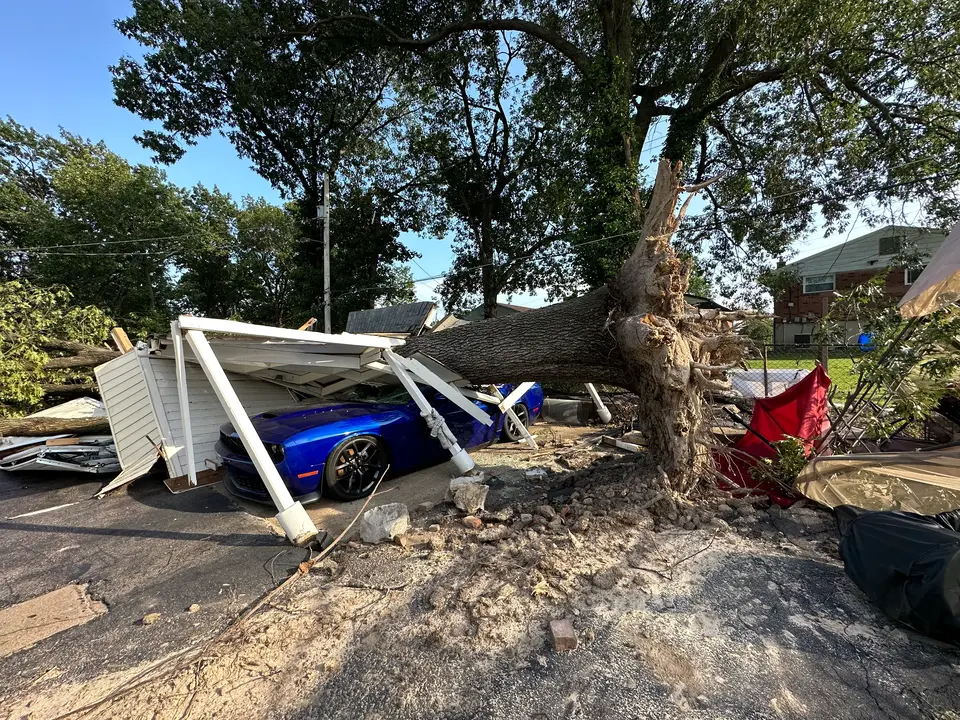
After a bad storm rolls through Columbia, the calls start coming in before daylight. A tree through a roof, limbs blocking a driveway, a pine that came down across a fence. Sometimes it’s dramatic. Sometimes it’s a mess that looks worse than it is.
Either way, the first questions are the same: Is this dangerous right now? What do I do? Will insurance cover it?
Step One: Don’t Touch It Yet
If a tree or large limb came down on or near your house, don’t go outside to investigate until you’ve checked a few things from inside:
- Power lines. If the tree brought down a line, stay away from it and call your power company immediately: Ameren Missouri, Columbia Water & Light, or Boone Electric Cooperative depending on where you are. A downed line on the ground or in a tree can still be energized. Do not approach it.
- Structural damage. If the tree hit your roof, look for signs of structural compromise before walking under it: sagging ceilings, cracked walls, anything that suggests the roof is bearing unusual load.
- Gas lines. If you smell gas after a storm, get out and call your gas company before anything else.
Once you’ve confirmed it’s safe to go outside, take photos before anyone touches anything.
What to Photograph
If you plan to file an insurance claim (and if a tree hit your house, you likely should), document everything before any cleanup starts.
Take photos of:
- The tree in its fallen position, showing where it landed and what it hit
- The damage to the structure from multiple angles
- The full length of the tree if possible, showing the root ball or the point of failure
- Any secondary damage (gutters, windows, fencing, vehicles)
Those photos do the heavy lifting on your claim. Tree Wizard provides our own photos and documentation as part of the job, but the more coverage you have from the moment it happened, the stronger your position.
When to Call for Emergency Service
Call immediately if:
- A tree or large limb is resting on your roof or is lodged against the house
- A tree is blocking your only driveway access
- A limb is hung in another tree above an area where people walk or park, called “widow makers” for a reason. They drop without warning
- Any tree came down near a gas meter, utility connection, or HVAC equipment
Tree Wizard is available 24/7 for emergency response. Call (573) 442-1838. We’ll assess whether the situation needs immediate action or can wait until morning.
Can wait until morning (or a few days):
- Tree down in the yard, didn’t hit anything, not blocking access
- Limbs down on the lawn or garden
- Debris scattered across the yard
These are still jobs that need to get done, but they’re not emergencies.
How Storm Damage Tree Removal Is Priced
Emergency work after storms is priced on the complexity of the job: what the tree is resting on, what equipment it takes, and how much rigging is involved. We’ll walk you through the pricing before any work starts.
For work going through insurance: insurance adjusters expect itemized documentation, and that’s what Tree Wizard provides. Every stage of the job is photographed, and you receive a detailed invoice and job summary built to support the claims process.
Paying out of pocket? We’ll give you a price after assessing the job on-site. Estimates are free.
Factors that affect the cost either way:
- Whether a crane is needed. A tree resting on a roof can’t just be pulled off. It has to be cut and lifted in sections. That’s crane work.
- Access to the property. After a storm, driveways and yards are often blocked or soft. Getting equipment to the tree takes more time.
- What’s underneath. A tree lying in an open field is a straightforward job. A tree across a deck, fence, and your neighbor’s property is not.
What Insurance Usually Covers
If a storm-damaged tree fell on an insured structure (your house, a detached garage, a fence), removal costs are often covered under your homeowner’s policy. The tree doesn’t have to have damaged the roof to be covered; contact alone with an insured structure is often enough to qualify.
What typically isn’t covered: removing a tree that came down in the yard without hitting anything, or removing trees that are still standing but damaged.
Tree Wizard provides photos, a detailed invoice, and a job summary designed to support the insurance review process. We work directly with homeowners and adjusters to give them what they need.
If you’re unsure whether your situation is covered, call your insurer first, then call us. We can also walk you through what the documentation will look like.
After the Tree Is Gone
Once the immediate hazard is dealt with, a few things are worth doing:
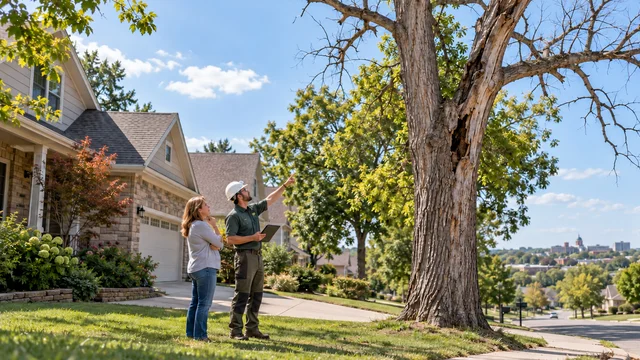
- Have the remaining trees on your property looked at. A storm that took one tree down may have stressed others. Root damage and soil saturation often affect multiple trees at once. If one went down, it’s worth having an ISA Certified Arborist check the others. Our guide to the warning signs a tree needs removal covers what to look for in the meantime.
- Check your remaining trees for hung limbs. Dead branches loosened by the storm sometimes hang for weeks before dropping. Get them out before the next event.
- Consider what you want to do with the stump. Stump grinding is typically quoted separately. If you’re replanting or want the space clear, include it while we’re already there.
One more thing: After a significant storm, door-to-door contractors show up fast. Don’t sign a contract on the spot with someone you’ve never heard of. Get a written contract from a company you can verify: licensed, insured, and local. Tree Wizard has been in Columbia since 2003. Call (573) 442-1838 and we’ll come look at it.
If you want to tarp the damaged area while you wait, do it only if you can safely access the roof without getting near the tree or any debris under load. When in doubt, leave it and get your insurer on the phone.
For a full assessment after storm damage, call (573) 442-1838 or see the rest of our Columbia, MO tree services.
Frequently Asked Questions
How quickly can you respond to storm damage in Columbia, MO?
Tree Wizard is available 24/7 for emergencies in Columbia, MO and the surrounding area. If there's a tree on your house, a limb hanging over an occupied structure, or a hazard blocking your only access, call (573) 442-1838 now. We pick up the phone and we show up. For storm damage that isn't an immediate threat, we'll schedule an assessment within days, though wait times stretch after a major storm.
Will my homeowner's insurance cover storm damage tree removal?
If a storm-damaged tree fell on an insured structure (your house, garage, or fence), removal is often covered under your homeowner's policy. Tree Wizard provides photos, a detailed invoice, and a job summary designed to support the insurance claim review process. Coverage varies by policy, so call your insurer to confirm.
What if the tree is down but didn't hit anything?
A downed tree that missed your structures may still be covered if it's blocking a driveway or ramp required for access by a disabled person. Otherwise, removal of a tree that fell in the yard without hitting anything is typically not covered. It's still worth getting removed: debris left on the ground for weeks attracts pests and creates a tripping hazard.
Can I remove a storm-damaged tree myself?
Small debris and downed limbs are usually fine to handle yourself. But a tree that's leaning against your house, hung up in another tree, or tangled with power lines should not be approached until a professional has assessed it. Hung trees are under tension and can drop without warning.