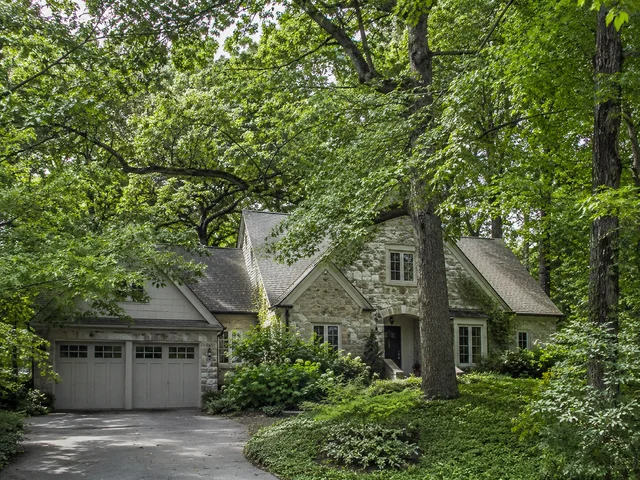

If you’ve bought an older home on a wooded lot in mid-Missouri, you probably fell in love with the canopy. A 70-foot oak shading the driveway, a row of pears blooming in April, a silver maple older than the house. That canopy is real value, until it isn’t.
Mature trees shift from asset to liability faster than most homeowners expect. A tree planted in 1985 next to a one-story ranch was a fine idea. The same tree in 2026, now leaning over a re-roofed house with a fiber line, a gas meter, and a clay sewer lateral running directly under its root flare, is a different conversation. Nothing about the tree changed. Everything around it did.
I’ve spent more than 20 years as an ISA Certified Arborist on mid-Missouri properties, and I get called out to deal with this across Boone and Callaway counties, including a lot of properties right here in Columbia, MO. This guide walks through the species we see most often, what goes wrong with each, why it costs so much, and which natives are worth investing in instead.
Why Mature Trees Become Liabilities
A few things are usually happening at once on an older lot:
- The tree has outgrown its original spacing and is now within striking distance of the roof, garage, or service drop.
- Decades of deferred pruning have left codominant stems, included bark, and long lateral limbs with no reduction cuts.
- Roots have found the path of least resistance, usually an old clay sewer lateral or a settled foundation drain.
- The species itself is structurally weak, short-lived, or under active pest pressure.
Tree removals get expensive when crane access is needed, when the drop zone is a roof instead of a yard, or when the tree is dead and brittle. The same tree that’s a straightforward removal in an open pasture costs several times more over a house with a power drop. The tree didn’t change. The risk profile did.
The Species We Get Called On Most
Bradford and Callery Pear
These were sold for thirty years as the perfect suburban tree: fast growth, neat shape, white spring flowers. The problem is structural. Bradford pears form tight, narrow crotches with included bark, and they almost always split, usually around year 15 to 25, usually in a thunderstorm, usually onto something expensive.
Callery pear is also now classified as invasive in Missouri. The state has run buyback programs encouraging removal. If you have one within falling distance of the house, it is not a question of whether it will split, only when.
Silver Maple
Fast, huge, and brittle. Silver maples can hit 80 feet on a Missouri lot, and the wood is soft enough that large lateral limbs shed regularly in storms. They are also aggressive surface rooters: silver maple roots are one of the most common causes of lifted sidewalks, cracked driveways, and infiltrated clay sewer laterals we see on older Columbia lots.
If you have a mature silver maple within 30 feet of the house, budget for it. It will need recurring canopy reduction, deadwood removal, and eventually a significant removal cost.
Ash (Green, White, Blue)
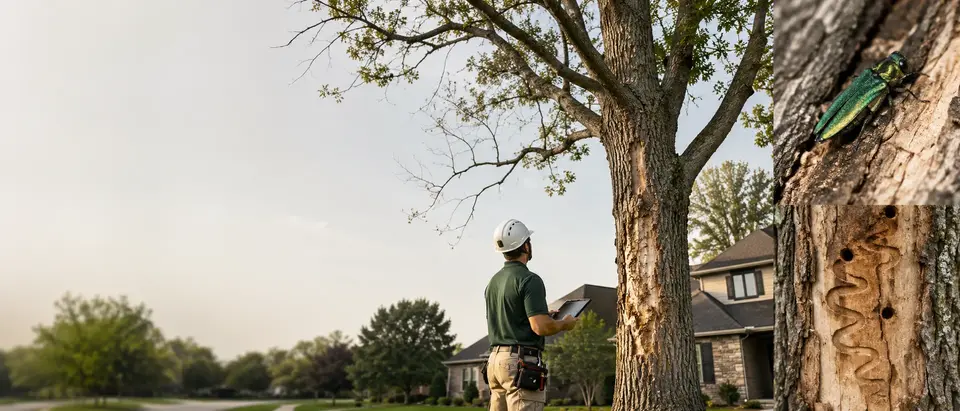
Emerald ash borer is now confirmed throughout Boone and Callaway counties. Untreated ash trees are dying. The question on most older lots isn’t “is my ash infested.” It’s “how dead is it already.”
Dead ash is a special problem because the wood becomes brittle fast. Climbers won’t climb it, which means crane removals, which roughly double the cost. If you have an ash you want to keep, it has to be on a treatment schedule with a certified arborist: systemic insecticide injections typically protect for two years. If you’re not treating it, you’re budgeting to remove it.
Pin Oak and Other Red Oaks
Red oaks (pin, northern red, black, scarlet) are the group most susceptible to oak wilt, which is established across Missouri. A red oak that contracts oak wilt can be dead within weeks, and the fungus moves through root grafts to neighboring oaks.
The single biggest preventable mistake we see: homeowners or unqualified crews pruning oaks in spring. Missouri’s high-risk window runs mid-March through July: that’s when sap beetles are active and fresh cuts attract them. Storm damage during that window needs immediate wound sealant. Pin oaks specifically also tend to drop large lower limbs and hold dead branches in the canopy for years, which makes them a recurring liability even when healthy.
Cottonwood
Eastern cottonwood gets enormous (90+ feet) and is the textbook example of a fast, soft-wooded species that sheds. Big limbs come down in summer thunderstorms with no warning, sometimes on calm afternoons (a phenomenon called sudden limb drop). Near a house, driveway, or play area, a mature cottonwood is a recurring removal-of-large-limbs job for the rest of its life.
Black Walnut
Walnuts are valuable timber and beautiful trees, but on a residential lot they bring problems most owners don’t expect: juglone toxicity that kills nearby vegetable gardens and many ornamentals, heavy nut drop that wrecks mowers and cracks windshields, and a tendency to drop large dead branches as they age. If you have one in the back forty, great. If you have one twelve feet from the deck, you have a maintenance commitment.
American and Siberian Elm
American elm is mostly gone from the landscape due to Dutch elm disease, but plenty of Siberian elms remain on older Missouri lots, usually planted in the 1950s and 60s. Siberian elm is brittle, sheds constantly, and seeds itself aggressively. The volunteer elms popping up in your fence line are almost always this species and will become full-size problems if ignored.
Willow
Weeping willow and black willow have the same triple problem: shallow aggressive roots, soft brittle wood, and short lifespans (40–60 years is typical). Willow roots are notorious for finding sewer laterals, and willow limbs come down regularly. Lovely tree by a pond on five acres. Bad choice within 50 feet of a house.
Mulberry
Volunteer mulberries are everywhere in Missouri because birds plant them. The wood is reasonably strong, but the fruit drop stains everything: driveways, siding, decks, cars. The trees grow fast in bad locations (against the foundation, into the gutter, through the chain link), and they’re almost always growing somewhere they shouldn’t be. Removal is rarely complicated, but it’s a job that recurs every few years if you don’t deal with the seedlings.
What’s Worth Planting and Keeping
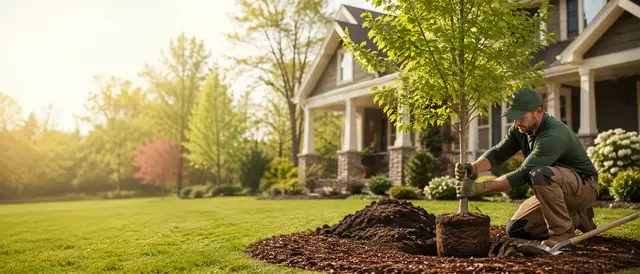
The flip side of all this: Missouri has excellent native species that are structurally sound, long-lived, and don’t carry the same liability profile. If you’re replacing trees on an older lot, these are the ones we recommend:
- White oak and bur oak: slower growing, but strong wood, deep roots, resistant to oak wilt compared to the red oak group, and capable of living 200+ years
- Shagbark and shellbark hickory: tough, storm-resistant, native wildlife value
- Bald cypress: surprisingly adaptable to upland Missouri yards, very wind-firm, beautiful fall color
- Eastern redbud: small ornamental, native, great near the house where you can’t fit a shade tree
- Flowering dogwood: native understory tree, fits where a Bradford pear would have gone, without the structural problems
- Sugar maple and black gum: solid shade trees with much better wood quality than silver maple
The general rule: slow-growing native hardwoods are almost always the better long-term bet than fast-growing imports.
What to Do If You Just Moved In
If you bought an older wooded property in the last year or two (or you’re about to), get an ISA Certified Arborist out for a walk-through before you do anything else. We can identify the species, flag the immediate hazards, separate “remove this now” from “we’ll watch this for five years,” and help you build a realistic budget instead of being surprised by a large emergency call after the next storm. For a fuller picture of what that budget looks like, our guide to the hidden costs of a wooded lot breaks it down category by category.
That inspection takes about an hour for a typical lot and will save you money in the first year on a wooded property. We cover Columbia, Fulton, Ashland, Auxvasse, Mexico, Holts Summit, and the surrounding Boone and Callaway County area.
Call (573) 442-1838 to schedule a walk-through, or see the full range of our Columbia, MO tree services.
Frequently Asked Questions
Are Bradford pear trees dangerous in Missouri?
Yes. Bradford and Callery pears form tight, narrow crotches with included bark that almost always split, typically between years 15 and 25, often in a thunderstorm. Callery pear is also classified as invasive in Missouri. If you have one within falling distance of a structure, removal is the right call.
What should I do about ash trees with emerald ash borer in Missouri?
Untreated ash trees in Missouri are dying from emerald ash borer, which is now confirmed throughout Boone and Callaway counties. If you want to save an ash, it needs to be on a systemic insecticide injection schedule (injections typically protect for two years) overseen by a certified arborist. If it's already heavily infested, removal is the safer and more cost-effective choice: dead ash becomes brittle fast, requiring crane removal instead of climbing.
What Missouri trees have roots that damage sewer lines?
Silver maple, willow, cottonwood, and elm are the most common offenders. These species have aggressive, shallow root systems that find the joints in older clay sewer laterals. If you have any of these within 30 feet of your sewer line and your home was built before 1980, a camera inspection is inexpensive protection against a lateral replacement that costs many times more.
When is it safe to prune oak trees in Missouri?
Missouri's high-risk window for oak wilt runs mid-March through July, when sap beetles are active and fresh cuts attract them. Pruning is safest from November through early March. If a storm damages an oak during the high-risk window, apply wound sealant immediately. Don't wait.
What are the best native trees to plant in Missouri to replace problem species?
For shade: white oak or bur oak (slow-growing but structurally sound and resistant to oak wilt), shagbark hickory, or sugar maple. For ornamental: eastern redbud or flowering dogwood, both native understory trees that fit where a Bradford pear might have gone, without the structural problems. Bald cypress is also excellent for full-sun spots and is surprisingly wind-firm.