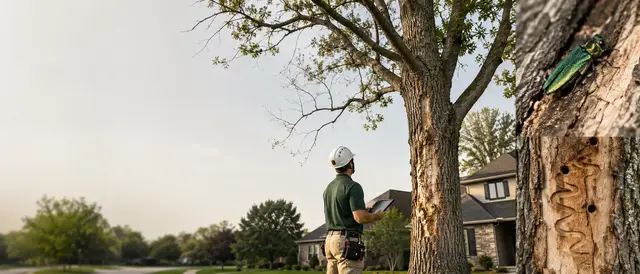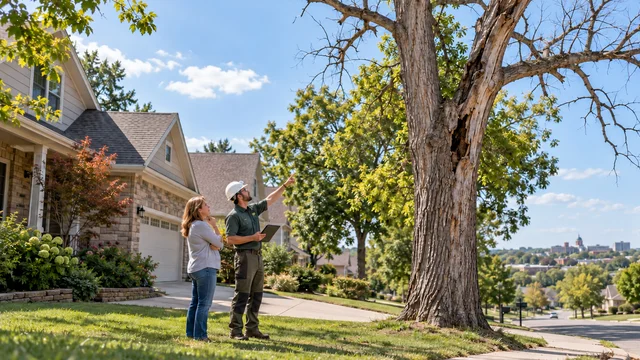

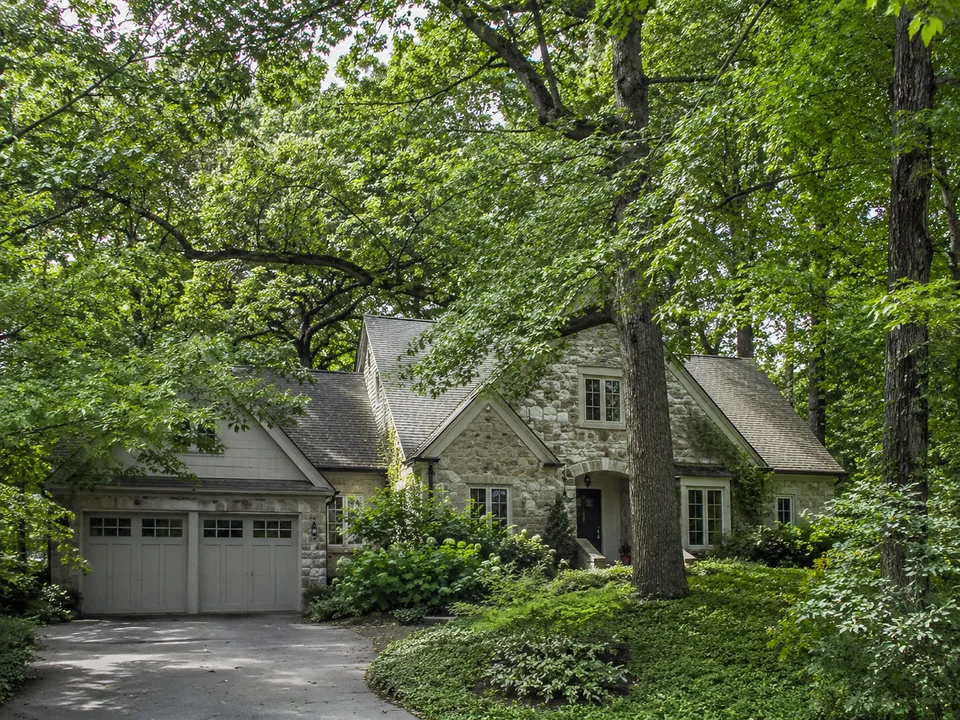
When you walk a small wooded lot with mature trees, what you see is privacy, shade, songbirds, and curb appeal. What you’re not seeing is twenty or thirty years of deferred maintenance, root systems running through clay sewer laterals, and a canopy that’s quietly waiting for the next ice storm.
I’ve spent more than 20 years as an ISA Certified Arborist walking older wooded properties across Boone and Callaway counties (including many right here in Columbia, MO), and the call usually comes within the first year someone owns the place. The conversation is almost always the same: I didn’t realize trees cost this much. This is the article I wish people had read before closing.
Why Trees Are Different From Other House Expenses
A roof is predictable. You replace it on a 20–25 year cycle and you can plan for it. A water heater has a known lifespan. Even HVAC has a service-life range you can budget against.
Trees don’t work like that. Tree expenses are lumpy: long stretches of nothing, punctuated by big single events. You can spend nothing on trees for three years and then face one very expensive October weekend when a derecho takes down two mature limbs onto your detached garage. Averaged over a decade, the spend is real and substantial. But you can’t smooth it into a monthly bill the way you’d budget a mortgage.
The right mental model is closer to “irregular, unavoidable, occasionally expensive.” Most years are cheap. A few years aren’t. You have to be ready for both.
The Major Cost Categories
Deadwood Removal
Every mature tree on a wooded lot is shedding dead branches all the time. On a forest edge that’s fine; they fall and decompose. On a residential lot, the dead wood is hanging over your roof, your driveway, your kid’s swing set, or the neighbor’s fence. Routine deadwood removal is one of the more affordable jobs we do on a mature tree, but the price climbs with size, access, and how long it’s been neglected.
This is the single most-deferred maintenance item we see. People wait until something falls, which is exactly the wrong order.
Canopy Pruning and Structural Work
Mature trees need periodic structural pruning: reduction cuts on long lateral limbs, removal of codominant stems, end-weight reduction over high-value targets like the house. On a deferred property, the first round of structural work costs several times what routine maintenance would, because there’s so much to catch up on. After that, you’re on a 3–5 year rotation that’s much cheaper.
Skipping this step is what turns a routine pruning bill into an emergency removal that costs several times more three years later.
Hazardous Tree Removals
This is the big one. A mature tree that’s leaning toward the house, hollow at the base, or structurally compromised is a removal, not a pruning. Most Columbia tree removals run $1,000–$3,000, and where a job lands, or whether it goes well beyond that range, depends almost entirely on access and drop zone:
- Open yard, no targets: the simple end of the range
- Over a fence or shed: sectional rigging, more time, more cost
- Over a house with services attached: some of the most demanding, and most expensive, work we do
- Crane-required removals: the costliest kind of removal there is
The biggest cost driver isn’t the tree. It’s whether we can drop it whole, rig it down in sections, or need a crane. On a heavily wooded lot with mature canopy near the house, crane work becomes the norm, not the exception.
Storm Cleanup and Emergency Work
Missouri gets a real spread of weather: ice storms in winter, derechos and straight-line winds in summer, the occasional tornado, and an annual handful of nights where 70-mph gusts come through unannounced. After a major event, the call volume across mid-Missouri spikes overnight, prices firm up, and wait times stretch to weeks.
Emergency tree work costs more for good reason: it’s after-hours, it’s often over a damaged structure, and it involves real risk. On a mature wooded lot, plan on a meaningful cleanup bill after every significant storm event, and more if a tree has actually hit something.
Crane Access Challenges
On many older lots in Columbia and across Boone and Callaway counties, the driveway is narrow, the side yard is fenced, the back yard slopes, and the neighbors’ big trees are in the way. Getting a crane in is sometimes the only safe option, and sometimes it’s not even possible. If a crane can’t reach, we’re rigging sections out by hand, which takes longer and costs more.
This is something an arborist can tell you on a walk-through, before you’re standing in the rain with a tree on the kitchen.
Root Damage to Clay Sewer Laterals
Most homes built before about 1980 in Missouri have clay or cast-iron sewer laterals running out to the street. Tree roots, especially from silver maple, willow, cottonwood, and elm, find the joints in clay pipe and grow inside, where the water and nutrients are. The first sign is usually slow drains, then a backup, then a lateral replacement that costs many times what an inspection would have.
A camera inspection is one of the cheapest insurance policies you can buy on an older wooded lot.
Foundation Concerns
Tree roots don’t usually crack foundations directly, but they can change soil moisture in ways that matter on Missouri clay soils, particularly during drought years. Large trees within 15 feet of a foundation, with a history of soil heave or settlement, are worth having looked at. Removal is sometimes the answer, but not always. Sometimes selective root pruning and a root barrier solve it.
Gutters and Roof Debris
Every fall, every house under a deciduous canopy fills its gutters. On a small wooded lot, you’re probably cleaning gutters twice a year minimum, and you may be looking at a leaf-guard system or a recurring cleaning service. Roof debris also accelerates shingle wear: moss, retained moisture, and wet leaf piles shorten roof life by years.
Homeowner’s Insurance and Documentation
If a tree falls on the house and the adjuster sees a hollow trunk or a long-dead leaning trunk, your claim can get complicated. A documented arborist assessment with photos, kept on file, is the single best thing you can do to protect a claim if one ever happens.
Invasive Volunteer Trees
Mulberry, Siberian elm, Tree of Heaven, honeysuckle, Callery pear seedlings: they all volunteer aggressively on wooded Missouri lots. Ignoring them for five years turns a quick brush-clearing job into a full day’s work for a crew. This is one of the few tree expenses that compounds dramatically with deferral.
Property Line and Neighbor Disputes
If your tree drops a limb on the neighbor’s car, fence, or shed, the question of who pays often turns on whether the tree was visibly dying or compromised before it fell. Documented inspections matter here too.
We also see real disputes over overhanging branches, encroaching roots, and trees right on the line. Get these resolved with a written agreement before they become a problem. We’ll do an assessment and provide documentation either side can use.
A Realistic Budget for Columbia, MO and Mid-Missouri Wooded Lots
Here’s what we tell people who just bought a heavily wooded older property:
Build a monthly tree fund. You won’t spend it every month. You won’t spend it most months. But over a 3–5 year window, a heavily wooded older lot in mid-Missouri generates real, recurring cost, and treating it like a sinking fund means you’re not financing emergency removals on a credit card.
Keep a separate emergency reserve. Separate from the monthly fund, separate from your general house emergency fund. This is for the one event in five years where a crane removal, a sewer lateral replacement, or storm cleanup over a damaged roof hits all at once. If you never touch it, great. If you do, you’re not refinancing your house to pay for it.
Expect year one to cost the most. If the previous owner deferred maintenance (which they almost certainly did, that’s why the lot looks the way it does), plan to spend more in year one than in any year after that. We’ll prioritize the work: hazards first, structural pruning second, cosmetic last. Most of the year-one spend pays for itself by preventing emergency calls.
Smaller lots and younger trees cost less to keep up. Very large or very old trees over structures cost more.
What a Pre-Purchase or Post-Move-In Assessment Looks Like
We walk the property with you for about an hour. We identify the species, flag immediate hazards, point out the trees that are doing fine and don’t need anything, identify the ones that need work in the next year, and the ones that should be on your radar but not your wallet yet. You get a written report with photos, recommendations, and a rough cost range for each item.
For someone who just moved in, it ends the anxiety of not knowing what you’re looking at. For someone considering a purchase, it’s the difference between buying a house with a manageable punch list of tree work and buying one with years of expensive catch-up ahead, both of which exist in our Columbia, MO service area.
If you’re wondering which trees on the lot are the real problems, our guide to Missouri tree species that become liabilities walks through the usual suspects, species by species.
Call (573) 442-1838 to schedule a walk-through, or see the full range of our Columbia, MO tree services.
Frequently Asked Questions
How much should I budget for tree maintenance on a wooded Missouri lot?
Treat it like a sinking fund: set aside a modest amount every month, even though most months you won't spend it. Keep a separate emergency reserve for major events like crane removals or storm cleanup over a damaged roof. On a property where the previous owner deferred maintenance, expect year one to cost more than any year after: hazards and catch-up pruning come first, and that early work prevents far more expensive emergency calls later.
What are the most common hidden tree costs when buying a wooded property in Missouri?
Deferred deadwood removal, structural pruning catch-up, hazardous removals near structures, and sewer root damage are the four we see most often. Root damage to clay sewer laterals (common in homes built before 1980) is the one that blindsides buyers most. An inexpensive camera inspection and a pre-purchase arborist walk-through can surface all of these before you close.
Can tree roots damage my sewer line in Missouri?
Yes, and it's common in homes built before around 1980 with clay or cast-iron sewer laterals. Silver maple, willow, cottonwood, and elm roots seek out the joints in old clay pipe. The first sign is usually slow drains, then a backup, then a lateral replacement that costs many times what an inspection would have. A camera inspection is the cheapest way to know what you're dealing with before a problem develops.
What does a pre-purchase tree assessment include?
We walk the property with you for about an hour, identify the species, flag immediate hazards, and note which trees need work in the next year versus which are fine. You get a written report with photos, recommendations, and a rough cost range for each item. For someone buying a wooded property, it's the difference between knowing you have a manageable punch list of deferred work versus years of expensive catch-up, both of which exist in our service area.
Does homeowner's insurance cover hazardous tree removal in Missouri?
It depends on your policy and the circumstances. Removal of a tree that fell on an insured structure is often covered. Removal of a standing hazardous tree is typically not. Claims can also get complicated if an adjuster decides the tree was visibly dying or compromised before it fell. A documented arborist assessment kept on file is your best protection. Call your insurer to confirm what your policy covers.