
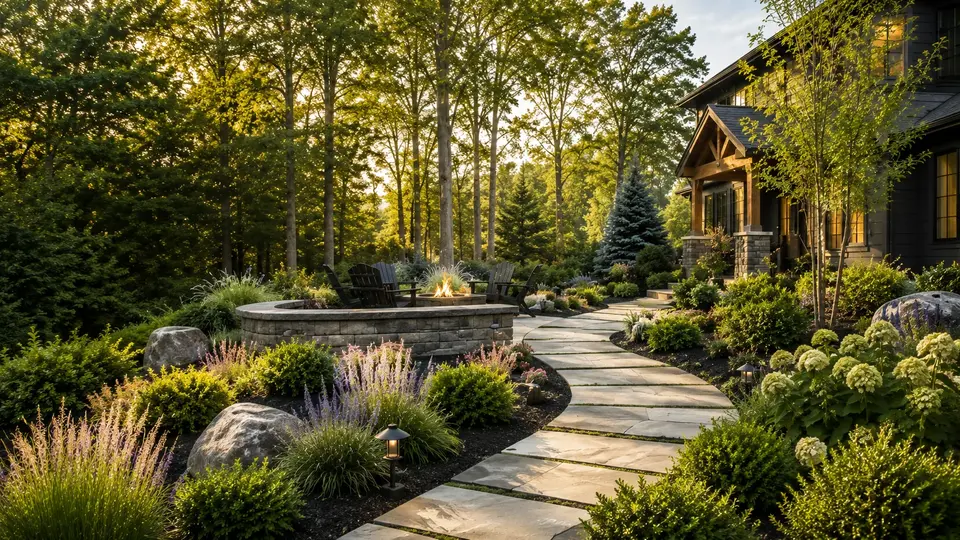
Our guide to the best trees for Columbia, MO covers the natives I’d plant on my own property: white oak, bur oak, that group. But that’s not always what shows up in the truck when I’m out on an estimate. Homeowners are planting arborvitae for privacy, red maple cultivars for fast shade, Japanese maples for the front bed. Those choices aren’t wrong. They just come with tradeoffs worth knowing before you plant, not after.
After 20+ years as an ISA Certified Arborist working properties around Columbia, here’s my honest take on the trees I actually see going into the ground, and what to watch for with each.
Emerald Green Arborvitae
The default choice for a privacy screen, and for good reason. It’s evergreen, holds a tight column shape without much pruning, and grows fast enough to fill in a fence line in a few years. The failure point I see most is drainage. Arborvitae doesn’t tolerate wet feet, and a low spot in Columbia’s clay soil that holds water after a heavy rain will rot the roots on one section of an otherwise healthy hedge. Bagworms are the other thing to watch. They show up in midsummer and can defoliate a section fast if you’re not checking for them.
October Glory Red Maple
A genuinely solid choice. October Glory is a true red maple cultivar bred for reliable fall color and a cleaner growth habit than the wild species, and the wood holds up better in storms than most fast-growing shade trees. If you want shade sooner than an oak will give it to you, this is one of the better trade-offs. Just give it consistent moisture and keep it away from sewer lines, since it shares red maple’s tendency toward surface roots.
Autumn Blaze Maple
Autumn Blaze gets confused with October Glory constantly, and it’s worth knowing the difference before you buy. It’s a hybrid, red maple crossed with silver maple, bred specifically for speed. It grows faster than October Glory, but it inherits some of silver maple’s weaker wood along the way. That trade-off is fine for the first 15–20 years. It’s the storm after that, when the tree is mature and a large included-bark union finally lets go, where I see the cost show up.
Japanese Maple
One of the most-requested ornamental trees I get calls about, and for good reason. The form and color are hard to beat in a front bed. Cold isn’t usually the issue; most named cultivars handle Columbia’s winters fine. Summer is where they struggle. A Japanese maple planted in full afternoon sun with no wind protection, especially on the west side of a house, tends to scorch and decline over a few seasons. Site it where it gets afternoon shade and it’ll reward you for twenty-plus years.
Crape Myrtle
Crape myrtle’s popularity has grown a lot in Columbia over the last decade, mostly for the long summer bloom. It’s genuinely worth planting if you pick a hardy cultivar: Natchez, Muskogee, and Tuscarora are the ones I’d trust here. Even then, expect some dieback in a hard winter. That’s normal, not a sign of a dying tree; cut back to live wood in spring once new growth shows you where the line is. Just know that in a rough year, it behaves more like a large flowering shrub than a small tree.
Leyland Cypress
Leyland cypress gets planted for the same reason as arborvitae (fast, dense, evergreen privacy), but I recommend it less often. It’s prone to canker diseases that show up more in Missouri’s humid summers than in the drier climates where Leyland cypress originally got popular, and once a section is infected, there’s no real fix short of removal. If you want a fast evergreen screen, I’ll usually steer you toward arborvitae or a native alternative instead.
Bradford and Callery Pear
Still one of the most commonly planted ornamental trees in Missouri, and the one exception on this list where I don’t have a “here’s the tradeoff” answer. It’s a tree I’d talk a homeowner out of, full stop. Bradford and Callery pear form weak, narrow branch unions that split apart as the tree matures, almost always in a storm, and Callery pear is now classified as invasive in Missouri. If you already have one, it’s worth reading our breakdown of Missouri trees that become liabilities to understand the timeline you’re working with.
Popular Doesn’t Mean Wrong: Know the Tradeoff
Most of the trees on this list are fine choices for a Columbia yard as long as you plant them in the right spot and know what to watch for. The exception is Bradford pear, which I’d steer you away from regardless of the site. If you’re not sure whether a tree you’re considering (or one that’s already on your property) is a keeper, that’s exactly what an ISA Certified Arborist consultation is for.
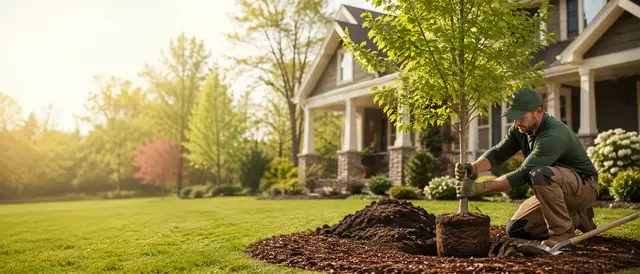
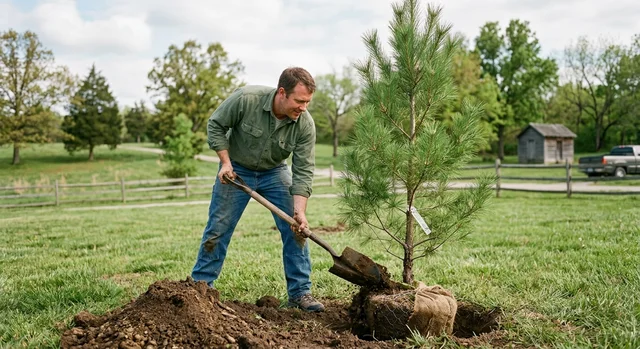
Our tree planting service covers site selection and installation for anything on this list or the native picks in our best trees guide, across Columbia, Fulton, Ashland, Auxvasse, Mexico, and the rest of Boone and Callaway County. See the full range of our Columbia, MO tree services.
Call (573) 442-1838 before you plant, and I’ll tell you straight whether the tree you’re eyeing is a good fit for your spot.
Frequently Asked Questions
Is arborvitae a good choice for privacy screening in Columbia, MO?
It can be, as long as the soil drains well. Arborvitae doesn't tolerate wet feet, and low spots in Columbia's clay soil hold water longer than the tree can handle. Watch for bagworms in midsummer; they're the most common reason a healthy-looking arborvitae hedge turns brown in patches.
What's the difference between October Glory and Autumn Blaze maple?
October Glory is a true red maple cultivar: strong wood, reliable fall color, and one of the better fast-growing shade trees for Columbia. Autumn Blaze is a hybrid between red and silver maple, bred for speed. It grows faster than October Glory but inherits some of silver maple's weaker wood, so it's more prone to storm damage as it matures.
Can Japanese maples survive Missouri winters?
Most named cultivars are hardy to Columbia's USDA zone 6a/6b winters, so cold isn't usually the problem. Summer is: Japanese maples planted in full afternoon sun with no wind protection often scorch or decline. Site it with afternoon shade, especially on the west side of a house, and it should do fine long-term.
Are crape myrtles hardy in mid-Missouri?
The hardier cultivars (Natchez, Muskogee, Tuscarora) generally survive Columbia winters, but expect some dieback in a harder winter. That's normal, not a sign the tree is failing. Cut back dead wood in spring once new growth shows where it's coming from. In a rough winter, a crape myrtle here behaves more like a large shrub than a small tree.
Should I still plant a Bradford pear?
No. Bradford and Callery pear are structurally unsound. They split apart as they mature, usually in a storm, and Callery pear is now classified as invasive in Missouri. It's still sold and still commonly planted, but it's one of the few trees on this list I'd talk a homeowner out of every time. See our guide to Missouri trees that become liabilities for the full explanation.