
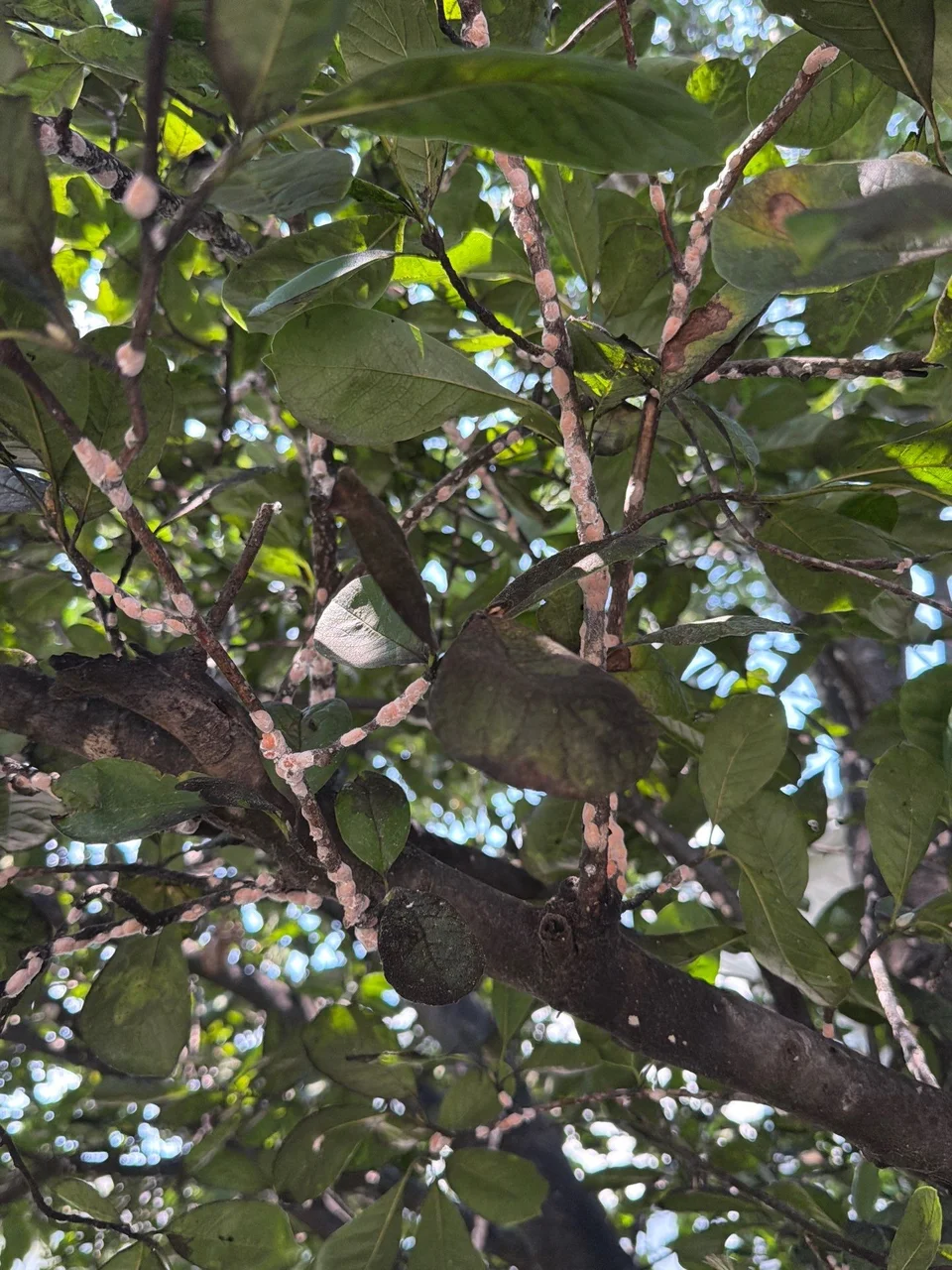
A Columbia homeowner called me this week about a magnolia that was raining something sticky onto the patio underneath it. The leaves were turning black, and the smaller branches looked like they’d been dipped in wax and rolled in popcorn. That’s magnolia scale, and late summer is exactly when people around Columbia start noticing it.
Here’s the part of that phone call worth repeating: for a tree that size, I told him to treat it himself. As an ISA Certified Arborist, I’d rather tell you the truth than sell you a service call you don’t need. But the truth also includes this: if you spray at the wrong time, you’ll waste a Saturday and a bottle of product and the scale won’t care. Timing is everything with this insect.
What Magnolia Scale Looks Like
Magnolia scale is one of the largest scale insects you’ll run into, and we see it on ornamental magnolias around Columbia regularly. Three signs, usually noticed in this order:
- Sticky honeydew. The scales feed on sap and excrete the excess as a sugary liquid that drips onto leaves, branches, cars, patios, whatever is below. A sticky driveway is the most common first symptom homeowners notice.
- Black sooty mold. A fungus grows on that honeydew, coating leaves and limbs in a black film. Heavy infestations can make a whole tree look like it’s been dusted with soot. The mold itself isn’t attacking the tree. It’s growing on the mess the scales leave behind.
- The scales themselves. Adult females are pinkish-white to tan swollen bumps, clustered along twigs and smaller branches. They don’t look like insects. They look like the bark grew warts.
If you’re seeing all three on a magnolia in late summer, you can be fairly confident about what you’re dealing with. But “fairly confident” isn’t certain. More on that at the end.
The Right Time to Treat Magnolia Scale in Columbia
The adult scales sitting on your branches are protected by a waxy coating. Spray them in that stage and most of them will shrug it off. This is the number one reason DIY scale treatment fails: not the wrong product, the wrong week.
The vulnerable stage is the crawler: a tiny mobile tan, reddish, or yellow speck that emerges from under the female and wanders the branch looking for a spot to settle and feed. Crawlers have no waxy armor yet. Around Columbia they emerge mid-to-late August into September, and that window (not the day you first notice the sticky patio) is when treatment actually works.
Don’t spray by a calendar date, though. Emergence shifts year to year with the weather. Watch the tree and spray when the crawlers actually show up. It’s the same logic behind how we time emerald ash borer treatments: you treat the insect’s life cycle, not the month on the wall.
How to Monitor for Crawlers
Two cheap tricks, both of which work:
- Tape trap. Wrap black electrical tape sticky-side-out around an infested twig. Check it every couple of days. When tiny specks start showing up stuck to the tape, crawlers are moving.
- Paper tap. Hold a sheet of white paper under an infested branch and tap the branch. Look for small specks that move on their own.
Once you’re catching crawlers, it’s time to spray.
The DIY Playbook for a Small Magnolia
If your magnolia is small enough that you can thoroughly reach every branch from the ground, this is a job you can do yourself. Here’s how I’d do it:
- Before crawlers emerge, wipe off what you can reach. On a small tree, physically brushing or wiping the adult scales off accessible twigs meaningfully cuts the population before the next generation ever hatches. Gloves and a rag. Not glamorous, but effective.
- Buy a summer-weight horticultural oil labeled for use on magnolia and scale insects. Not a dormant-only oil; those are formulated for leafless winter application and can damage a tree in leaf. Read the label; it will say.
- Spray for coverage, not volume. The oil works by contact. It has to physically coat the crawlers. Get the twigs and the undersides of branches, not just a mist over the canopy. A thorough job with a pump sprayer beats a sloppy job with anything.
- Repeat per the label, commonly 10–14 days later. Crawler emergence is staggered over weeks, so one pass always misses the late hatchers.
Two cautions that matter in a Columbia late summer: don’t spray a drought-stressed tree, and don’t spray in extreme heat. Many oil labels prohibit application around 85–90°F. If we’re in a dry stretch, water the tree deeply first and wait for a cooler window. And skip the heavy fertilizer: pushing lush soft growth just sets a better table for the scales next year.
When It’s a Job for Us
I mean it when I say small trees are DIY. I mean it just as much when I say these situations aren’t:
- Height. Once a magnolia gets up around 15–20 feet or more, you physically can’t get thorough coverage from the ground, and coverage is the whole game.
- Position. A tree leaning over your house, deck, or prized landscaping needs professional spray equipment to treat completely without making a mess of everything under it.
- Heavy, established infestations. When every twig is encrusted, one season of well-timed sprays gets you substantial suppression, not eradication. The realistic plan is crawler sprays now, a dormant-oil application before budbreak next spring, and a re-inspection to see where things stand. Sometimes pruning out the worst-encrusted twigs is part of that plan too; our seasonal guide to when to trim trees in Columbia covers how that timing works.
One more thing I tell every scale client: old scale shells and sooty mold stay visible for months after the insects are dead. A tree that still looks dirty next June isn’t proof the treatment failed. Check for fresh honeydew: that’s the sign of live scales, not leftover grime.
Not Sure It’s Magnolia Scale? Send a Photo
Misidentification is a real risk here. Sooty mold shows up with aphids and other honeydew producers too, and I’ve seen homeowners buy products for a problem they didn’t have. After 20 years of looking at sick trees around Columbia, a close-up photo of the bumps on a twig is usually all I need.
So before you buy anything: take a clear photo of the affected branches and send it our way, or call (573) 442-1838. We’ll confirm what you’re dealing with, and if it’s a small tree and a DIY job, that’s exactly what we’ll tell you. If it needs more than that, a certified arborist assessment will lay out the full plan, the same way we approach tree care across Columbia and mid-Missouri every day.
Frequently Asked Questions
What does magnolia scale look like?
Adult female magnolia scales are pinkish-white to tan swollen bumps, clustered along twigs and smaller branches. They look more like a growth on the bark than an insect. The second giveaway is what they leave behind: sticky honeydew dripping on everything below the tree, and a black sooty mold that grows on that honeydew and coats leaves and limbs in heavy infestations.
When should I treat magnolia scale in Missouri?
Wait for the crawler stage: the tiny mobile tan, reddish, or yellow specks that emerge from under the adult females in mid-to-late August into September here in Columbia. Adults are protected by a waxy coating, so spraying them earlier in the summer accomplishes very little. Monitor for crawlers with a tape trap rather than spraying by a calendar date, then apply a summer-weight horticultural oil labeled for scale.
Can I get rid of magnolia scale in one season?
On a light infestation, often yes. On a heavy one, expect one season of well-timed sprays to knock the population way down: substantial suppression, not eradication. Plan a dormant-oil application before budbreak the following spring and check the tree again next summer. Old scale shells and sooty mold stay visible for a while even after the insects are dead, so don't read lingering black residue as treatment failure.
Should I hire a professional for magnolia scale treatment?
It depends on the tree, and I'll tell you honestly. A small magnolia you can reach thoroughly from the ground is a genuinely DIY-friendly job with an inexpensive product. A taller tree, one growing over your house or landscaping, or a heavy multi-season infestation needs professional spray equipment to get real coverage. Not sure which you have? Send us a photo or call (573) 442-1838 and we'll tell you straight.